
California is still one of the best places to build a real estate career—if you approach it like an operator. In 2026, the gap between agents who “try it out” and agents who build a business has widened. Buyers and sellers are more informed, major hubs like Los Angeles, San Diego, and the Bay Area are intensely competitive, and your first year is decided by systems: training, follow-up, and consistency.
This master guide is your Strategic Roadmap for launching a real estate career in California—an operational blueprint designed to keep you focused instead of getting lost in the noise. To win in the 2026 market, you cannot treat this as a hobby; success follows a proven, five-stage sequence that moves from initial validation to a professional brand.
While this guide provides the high-level "What" and "Why" of the journey, our dedicated deep-dive resources handle the granular "How" for every critical step.
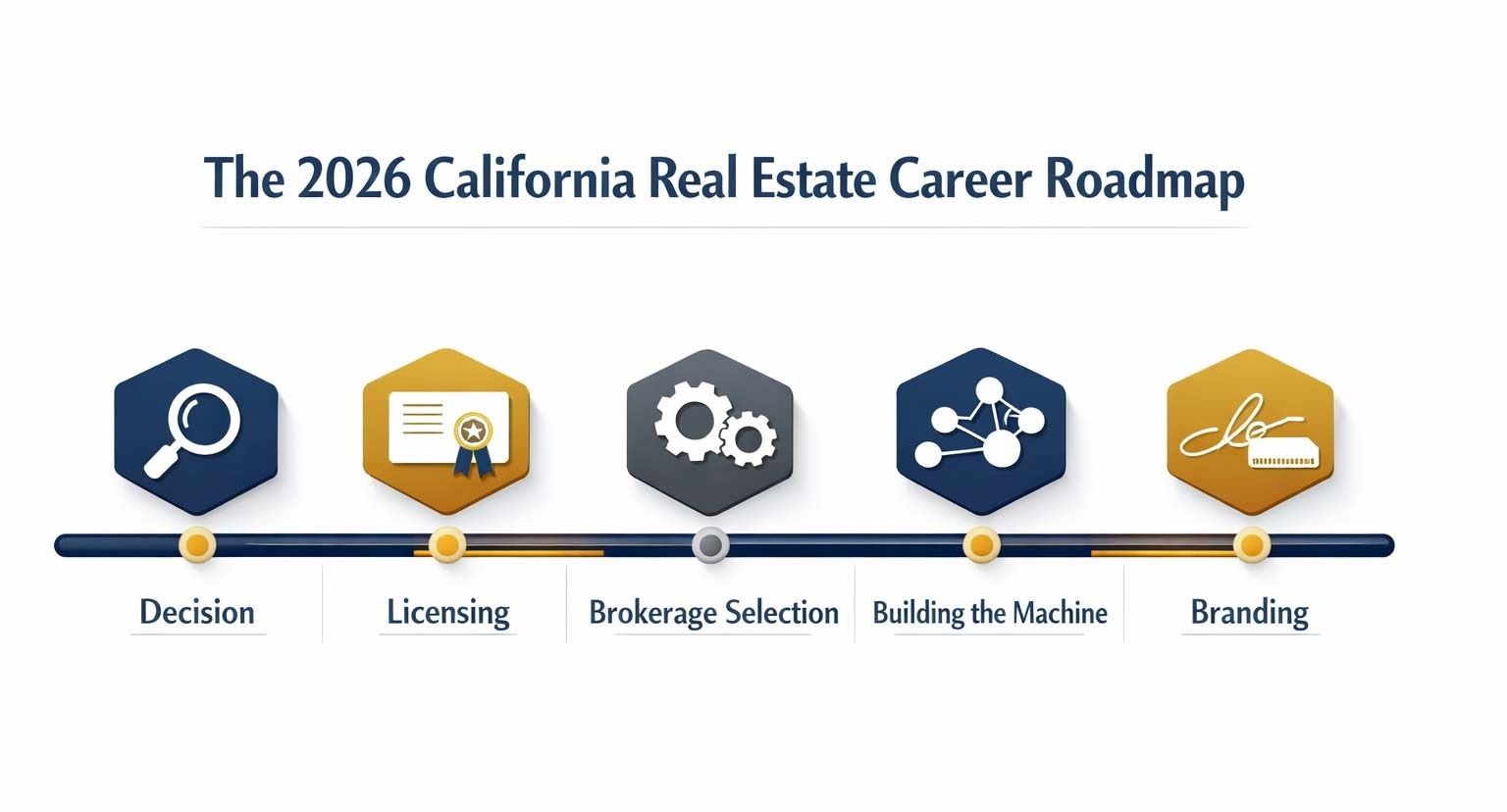
Real estate in California is entrepreneurship, not employment. That mindset shift is the first “make-or-break” point. In 2026, consumers can shop agents instantly, compare reviews, and expect speed. If you want predictable paychecks, this career will feel emotionally expensive. If you can tolerate delayed gratification and execute weekly systems, it can be incredibly rewarding.
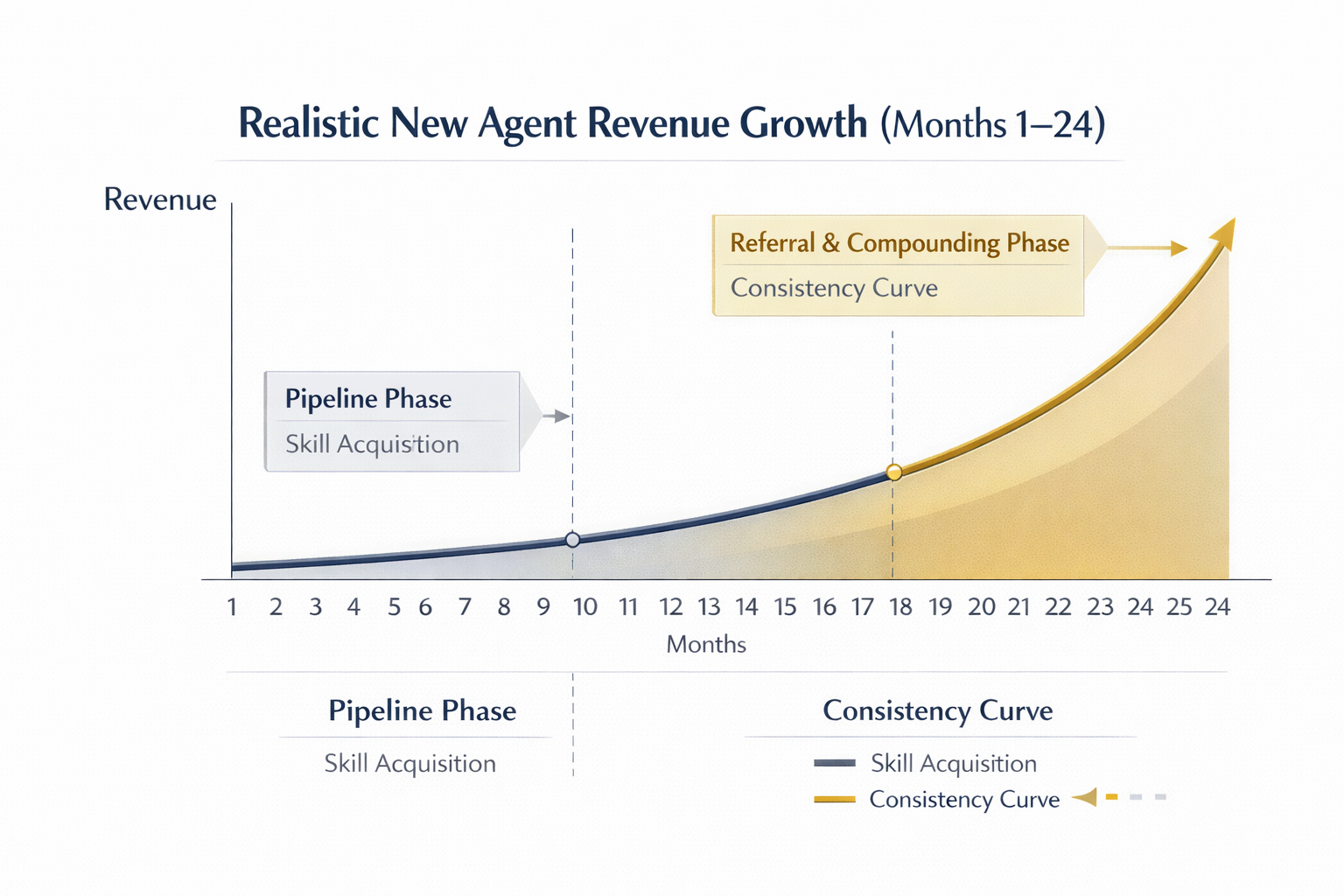
Before you quit your job, you need to understand the financial runway reality—not motivational quotes. Read the reality of new agent income in California so you can budget for the ramp-up. Then map your launch pace understanding the timeline to launch a California real estate career - a realistic sequence of steps from decision to first client - so you don’t rush, stall, and lose momentum.
The DRE sets the legal framework for licensing and consumer protection, but the market sets the standard for professionalism. In major hubs—Los Angeles, San Diego, Bay Area—you will compete against experienced agents with systems. Your edge is structure.
Many new agents “feel busy” for 60 days and still have zero pipeline because they never defined a measurable weekly scoreboard: conversations, appointments, follow-ups. If you can’t track it, you can’t improve it.
In California, your broker isn’t just a logo above your name—your broker is your supervising operator. Your license allows practice, but your brokerage determines whether you learn to survive: contracts, disclosures, negotiations, and transaction management in a fast-moving environment.
In 2026, the right brokerage decision is made through interviews, not applications. Start by using how to interview a broker and get a structured interview checklist to evaluate training, supervision, and support. Then learn commission splits explained for new agents and understand why splits don’t matter until you’re closing, and what to ask about real costs. Most new agents choose based on split or vague promises—operators choose based on training cadence, accountability, deal review, and the brokerage’s operational support.
Ask how the brokerage handles compliance and supervision under California rules—transaction review, disclosures, recordkeeping, and how errors are caught before they become DRE complaints. In high-velocity markets like LA and San Diego, “fast” without systems becomes risk.
Most brokers will promise you leads in the interview; few will show you the CRM data that proves where leads come from, how they’re routed, and what conversion looks like. If they can’t show process, treat it as marketing.
Ready to move from “research mode” to execution?
ADHI Schools’ California pre-licensing courses are built for real-world readiness—DRE-aligned education plus practical operator guidance so you enter your brokerage with momentum.
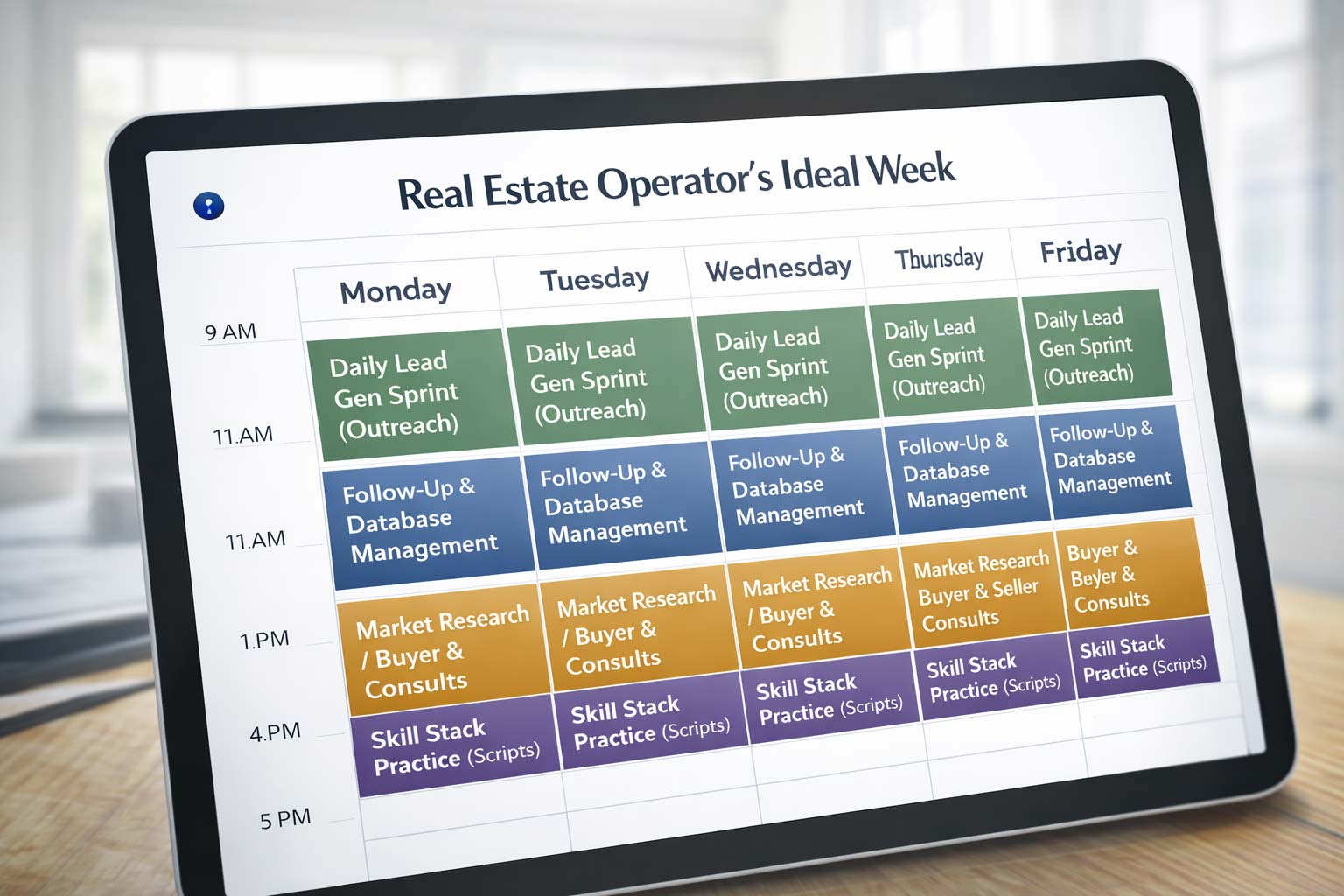
In 2026, your business is not “homes.” Your business is conversations and follow-up—and the asset that compounds those conversations is your database. This phase is where new agents stop drifting and start operating.
Begin by building a launch plan that forces progress. Use finding your first 3 clients in California with a 30-day scoreboard to generate conversations, appointments, and early clients to create a measurable pipeline. Then lock in the most important asset you’ll ever own: building your real estate database from scratch. Learn how to descriptive anchor: how to capture, tag, and follow up so your contacts become compounding business. A clean database turns inconsistent effort into predictable reach.
Lead generation has evolved. Social media can create awareness, but it rarely replaces direct outreach, open houses, and consistent follow-up. The winning agents combine “digital trust” with “operator cadence”: daily outbound, weekly open house reps, and a follow-up system that doesn’t break when motivation dips.
Buying leads before you can handle speed-to-lead and follow-up is like pouring water into a bucket with holes. If you don’t have a weekly follow-up system, you’ll pay to learn a painful lesson.
Confidence isn’t a personality trait—it’s the result of competence. In California, clients expect clarity: what happens next, what the contract means, how pricing works, and how you protect them. The Skill Stack is how you become “safe” to hire.
Start by building your communication foundation. Be sure to work on practicing scripts until you sound natural and confident so you stop hesitating on calls and in consultations. Then prepare for your most important revenue meeting: your first listing appointment. You should have a structured agenda, pricing conversation, and next steps that feel professional. When you know what to say before you say it, you execute more reps—and reps create deals.
Consumers have shorter patience and more options. Your skill advantage is speed + clarity: fast response, clean process, and confident explanations without pressure.
Many new agents “learn” by watching videos but never practice out loud. Your first real client is not the place to rehearse. If you can’t say it smoothly in private, you won’t say it under pressure.Start by building your communication foundation. Be sure to work on practicing scripts until you sound natural and confident so you stop hesitating on calls and in consultations. Then prepare for your most important revenue meeting: your first listing appointment. You should have a structured agenda, pricing conversation, and next steps that feel professional. When you know what to say before you say it, you execute more reps—and reps create deals.
Branding in 2026 is not a logo—it’s a consistency system that earns trust in your local market. Your brand is what people expect when they see your name: how you communicate, how you educate, how you follow up, and how reliable you feel. Most new agents don’t fail due to talent; they fail due to inconsistency—no plan, no routine, and a mindset collapse when results lag.
Start with structure. Make sure to create a business plan as a new
California agent that ties activities to pipeline outcomes so your days stop being
random.
Then build a sustainable content and reputation system with social media strategy for new
real estate agents, you need a practical posting framework that supports trust
instead of
distraction.
Your goal is not virality; it’s to be familiar and credible
In major hubs, you’re competing with agents who already have reviews, volume, and recognition. Your edge is consistency: clear niche, repeatable value, and relentless follow-up.
Most agents post when they feel motivated. Operators post on schedule. If your marketing depends on mood, your pipeline will always swing.

"Hey guys,
I took the exam today and passed!!!!
It only took me one try which was one of my goals. I took the online
classes and follow your suggestions so I took the crash course,
used the crash course app a lot, took 7 mock tests and went
confident to present the exam. Thank you for the great job you are
doing, you guys are awesome!!!! May God continue to bless you!"
Willie V.