As a real-estate professional, your gross commission income (GCI) is the single most revealing number in your business. Nail it, and you’ll know exactly how every listing appointment, buyer tour, or Read more...
As a real-estate professional, your gross commission income (GCI) is the single most revealing number in your business. Nail it, and you’ll know exactly how every listing appointment, buyer tour, or marketing dollar converts to cash in your pocket. Miss it, and you’ll bounce between big months and famine months with no idea why.
.commission, th, td{
border:1px solid gray !important;
border-style: dashed !important;
border-collapse: collapse !important;
margin:10px !important;
padding:10px !important;
}
Below is a quick primer—plus practical tactics—for understanding, calculating, and growing your GCI. Wherever you are on the journey, remember that the first step is a solid education. If you still need to earn your license (or want better continuing-ed), check out the live, online, and self-paced options at ADHI Schools.
What Is Gross Commission Income?
Gross Commission Income is the total commission you earn on a transaction before any splits with a co-op agent, your brokerage, or taxes. Think of it as your top-line revenue—the raw fuel that powers the rest of your business.
Pro tip: Because GCI is pre-expense, it’s not your spendable income. Always account for splits, marketing costs, and Uncle Sam.
How to Calculate Gross Commission Income
Simple math, big insight:
GCI = Sales price x Commission Rate
Example: A $500,000 sale at a 2.5 % commission rate
$500,000 × 0.025 = $12,500 GCI
If your brokerage split is 70/30, you keep $8,750 before expenses. Knowing this formula lets you reverse-engineer goals: need $150k in GCI this year? Divide by your average GCI per deal and you’ll see exactly how many closings you need.
Five Proven Ways to Boost Your GCI
Close More TransactionsMore marketing → more leads → more closings. Diversify beyond your sphere: online leads, open houses, FSBOs, expireds, community events—anything that fills your pipeline.
Aim for Higher Price Points Selling in a higher-end market (or adding a luxury niche) instantly lifts your income per transaction. ADHI can help you level-up your branding for that space.
Negotiate a Better SplitTop producers have leverage. If your volume is climbing, discuss improved cap structures—or even a 100 % model—with your broker.
Invest in Marketing & BrandingConsistent social media, video, and geographic farming keep your name in front of prospects. Agents who brand relentlessly enjoy stronger lead flow and referral business.
Get a Real-Estate Coach Nothing accelerates income like coaching. Structure, accountability, and battle-tested systems can take agents from five figures to multiple six or seven. (ADHI offers private and group coaching for graduates—ask about it when you enroll.)
Commission Basics You Can’t Ignore
Variable
Typical Range
Why It Matters
Side of Deal
2 %–3 % per side
Double-ending can boost GCI but may limit referrals if not handled with care.
Brokerage Split
60/40, 70/30, 80/20, or caps
Splits (and desk/tech fees) dramatically affect your net. Negotiate wisely.
Fees & Overhead
Varies
Transaction coordination, MLS dues, marketing spend—all eat into net income.
Track Every Dollar
You can’t grow what you don’t measure. Use your CRM, a spreadsheet, or budgeting software to log:
GCI per deal
Brokerage splits & fees
Lead-gen and marketing costs
Transaction expenses
Net profit per month
Treat your real-estate practice like a business, not a hustle.
Ready to Earn More?
Understanding GCI is just step one. The agents who consistently hit—and exceed—their income goals follow a plan, track metrics, and invest in education.
If you’re still pre-license (or need post-license CE), start with a school that’s trained tens of thousands of California agents since 2003. Enroll today in ADHI Schools’ Real-Estate License Program (free 7-day trial available) and get the knowledge, tools, and support to maximize your GCI from day one.
Your commissions—and your future—begin with the right education. Let’s build that six- or seven-figure real-estate career together.
|

Dreaming of a flexible career with limitless potential and the freedom to set your own path? A career in real estate could be exactly what you're looking for. However, choosing the right time to dive into Read more...
Dreaming of a flexible career with limitless potential and the freedom to set your own path? A career in real estate could be exactly what you're looking for. However, choosing the right time to dive into your real estate education can significantly impact your early success—and May is uniquely positioned as the ideal month to begin your journey.
Why May? The Strategic Timing Advantage (Pre-Summer, Pre-Fall Market Rush)
May sits at the perfect juncture in the real estate calendar. Historically, the housing market heats up significantly through the summer and fall, meaning that starting your real estate coursework now positions you perfectly to leverage upcoming market peaks. Imagine completing your studies, passing your licensing exam, and hitting the ground running just as the demand for qualified agents spikes.
Starting your real estate education in May allows you to comfortably focus on absorbing critical industry knowledge without the immediate pressure and stress of a frantic market. Contrast this with starting in mid-summer—when you'd likely feel rushed, playing catch-up, and potentially missing prime opportunities in the bustling fall market.
The Advantages of Starting Your Journey Early
Procrastination might be tempting, but getting started earlier pays off dramatically in real estate:
Momentum and Confidence: Beginning your education in May helps build steady momentum, boosting your confidence as you gradually master essential concepts.
Comprehensive Preparation: You have ample time to thoroughly absorb and understand the material, ensuring you're genuinely ready for your licensing exam.
Networking Advantage: Starting earlier grants you extra time to build relationships with instructors, industry professionals, and fellow students—connections that can significantly enhance your early career success.
Taking control of your career transition now isn't just smart—it's empowering. By starting in May, you're proactively shaping your professional future on your own terms.
Understanding the Timeline: What Starting in May Looks Like
Our real estate program can be finished in about 8 weeks, depending on your pace and commitment level. Starting now, in May 2025, means you could realistically complete your course and prepare thoroughly for your licensing exam by mid-summer.
Here’s a simplified timeline if you start now:
May - June: Coursework and foundational learning.
July: Intensive exam prep and practice exams.
August: Licensing exam and application submission.
Late August to September: Receive your license and launch your real estate career, just as the market demand increases significantly.
By choosing May, you're not only timing your entry into the industry optimally; you're giving yourself the best chance to succeed right from the start.
Take the First Step: Join Our Enrollment Sessions
Ready to take action? You're invited to attend our upcoming enrollment information sessions at ADHI Schools, designed to guide you step-by-step through the process of becoming a licensed real estate professional.
Our enrollment sessions cover:
Course structure and what to expect
Licensing requirements and exam preparation
Career pathways and market insights
Sign up now for either our convenient online or engaging in-person sessions:
Online Self Study Sessions: Start anytime!
Instructor Led Sessions: Reserve your seat here!
Don't miss this ideal opportunity to strategically position yourself for success. Start your real estate journey this May and step confidently into a rewarding career.
Your future is waiting—make May your month!
|

California dreaming? Suppose your dreams involve navigating the exciting world of real estate and helping people find their perfect rental haven. In that case, a career as a property manager in Read more...
California dreaming? Suppose your dreams involve navigating the exciting world of real estate and helping people find their perfect rental haven. In that case, a career as a property manager in California might be your calling! With a booming rental market, diverse properties (from beachfront bungalows to chic city apartments), and a dynamic landscape of laws and regulations, California offers a unique and rewarding experience for property management professionals.
But hold on! Before you jump headfirst into showing properties and collecting rent, let's break down what it really takes to thrive as a property manager in the Golden State. This guide will be your roadmap, covering everything from licensing and essential skills to the quirks of the California market and the tech tools that'll make your life easier.
Licensed vs. Unlicensed: Finding Your Path
To begin, it's important to understand California property management licensing. Your role will determine whether you need a real estate license or not.
Licensed property managers hold a real estate license, which opens doors to a broader range of responsibilities and higher earning potential. Consider negotiating leases, collecting rent, and even representing clients in property sales. It's like having a VIP pass to the California real estate scene!
On the other hand, unlicensed managers might be working as a resident property manager, for example. Alternatively, they may be working as a w2 employee at a large apartment complex. Maybe they are an assistant to a licensed property manager and handling administrative tasks like coordinating maintenance. They're essential team members, but they must work under the supervision of a licensed broker. Think of it as being the Robin to a licensed Batman!
The Journey to Becoming a Licensed Pro
Ready to take the plunge and get your real estate license? Here's the lowdown:
Check the Basics: Make sure you're at least 18, have a high school diploma or equivalent, and are legally allowed to work in the U.S. (No surprises here!)
Hit the Books: It's time to dive into the world of real estate! Enroll in an accredited real estate school like ADHI Schools and complete the required coursework. You'll cover topics like real estate principles and practices and even choose an elective (hint: Property Management is excellent!).
Conquer the Exam: Once you've mastered the fundamentals, it's time to prove your knowledge. The California real estate license exam will test your understanding of national and state-specific laws, so study hard and utilize practice tests to boost your confidence.
Find Your Brokerage: Freshly licensed and ready to roll? Not so fast! In California, licensees must partner with a licensed broker who should be providing valuable mentorship, legal oversight, and a chance to learn the ropes from seasoned professionals.
Level Up with Certification (Optional but Recommended): Want to stand out? Consider earning a Property Management Certification from the California Association of Realtors (CAR) or the Certified Property Manager (CPM) designation from the Institute of Real Estate Management. It's not mandatory, but it adds serious credibility to your name and demonstrates your commitment to excellence.
Mastering the Property Management Game in California
Now that you've sorted out the licensing let's discuss the skills you'll need to succeed in the California market.
Marketing Maestro: California's rental market is competitive! You'll need to be a marketing whiz to attract tenants. Leverage online platforms like Zillow, social media, and even good old-fashioned networking to showcase your properties beyond basic listings.
Tenant Whisperer: Building strong relationships with tenants is key. Be responsive, approachable, and proactive in addressing their concerns. Remember, happy tenants = happy landlords!
Financial Guru: You must be comfortable with numbers, from collecting rent to managing budgets. Utilize property management software to streamline accounting tasks and provide transparent financial reports to owners.
Legal Eagle: California has a unique set of laws and regulations, including rent control (AB 1482), eviction rules, and security deposit limits. Stay informed and ensure your practices comply with all applicable laws.
Tech-Savvy: Embrace technology to boost efficiency. Property management software like AppFolio or Buildium can automate tasks, improve communication, and keep you organized.
Navigating the California Rental Landscape
California's rental market is as diverse as its landscape. Each region has quirks, from bustling city centers with sky-high rents to laid-back beach towns with seasonal demand.
Market Trends: Stay updated on rental trends in your area. For example, you might encounter fierce competition for units and strict rent control policies in San Francisco. In contrast, a beach town might experience seasonal fluctuations in demand.
Key Laws: Familiarize yourself with California-specific laws like AB 1482 (rent caps), eviction rules, and security deposit limits. These regulations can significantly impact your day-to-day operations.
Building Your Property Management Empire
Are you dreaming of running your own property management company? Here's how to get started:
Legal Foundation: In California, you'll typically need to form a corporation to operate a property management company. Make sure you obtain all necessary licenses and permits.
Operational Excellence: Set up efficient systems for rent collection, maintenance requests, and tenant communication. Invest in reliable property management software to streamline your workflow.
Client Acquisition: To attract clients, build a professional website, leverage social media, and network with real estate agents. Offer competitive rates and exceptional service to build a strong reputation.
FAQs: Your Burning Questions Answered
Q: Do I need a real estate license to manage properties in California?
A: It depends! If you're involved in activities like negotiating leases or handling rent, then yes, a license is mandatory. However, unlicensed individuals can perform limited tasks that do not require a real estate license.
Q: What's the average salary for a property manager in California?
A: Salaries can vary based on experience, location, and the types of properties you manage. However, you can expect to earn a comfortable living, with the average salary ranging from $68,000 to $85,000 per year. Major cities like San Francisco and Los Angeles often offer higher earning potential.
Q: Is the Property Management Certification (PMC) or Certified Property Management (CPM) designation essential?
A: While not required, the PMC from CAR can give you a competitive edge. It demonstrates your expertise and commitment to professional development, which can attract clients and employers.
Q: Can I manage short-term rentals like Airbnb in California?
A: Absolutely! However, local regulations regarding short-term rentals can vary significantly. Ensure you research and comply with your area's applicable permits and restrictions.
The Bottom Line: A Rewarding Career Awaits
Becoming a successful property manager in California requires dedication, knowledge, and a passion for real estate. Following the steps outlined in this guide, mastering essential skills, and staying informed about the ever-evolving California market, you can build a thriving career and help people find their perfect homes. So, are you ready to take on the challenge? The Golden State awaits!
Love,
Kartik
|

Suppose you’ve ever considered launching a career in real estate. In that case, California’s dynamic and competitive market can be an appealing place to start—regardless of whether you live in the Read more...
Suppose you’ve ever considered launching a career in real estate. In that case, California’s dynamic and competitive market can be an appealing place to start—regardless of whether you live in the Golden State. One common question that emerges for aspiring real estate professionals is: “Can I get a California real estate license if I live in another state?”
The short answer is yes.
California allows out-of-state residents to apply for and obtain a California real estate license. However, the process involves specific requirements, pre-licensing education, and careful preparation for the state’s licensing exam.
Below, we’ll break down the essential steps, examine reciprocity rules, discuss the role of pre-licensing courses, and highlight online exam preparation resources to help you earn your California real estate license—no matter where you live.
Understanding California’s Real Estate Licensing Requirements
California is known for its stringent requirements for becoming a licensed real estate salesperson. The California Department of Real Estate (DRE) administers the licensing process and does not impose a state residency requirement. If you meet the educational and examination standards, you can become a California real estate agent even if you reside in another state.
Key Licensing Requirements Include:
Age: You must be at least 18 years old.
Pre-Licensing Education: You need to complete 135 hours of California real estate courses, which typically include:
Real Estate Principles (45 hours)
Real Estate Practice (45 hours)
One elective course (45 hours) from a state-approved list (often Real Estate Finance, Legal Aspects of Real Estate, Property Management, or Real Estate Economics).
Passing the California Real Estate Exam: Once you’ve completed the courses and have your course completion certificates, you must pass the state’s real estate salesperson exam.
Background Check and Fingerprinting: Applicants must submit fingerprints for a criminal background check. While you are not required to live in California, you must complete your fingerprinting at an approved location.
Sponsorship by a California Real Estate Broker: You must work under a licensed California real estate broker after passing the exam. While you can live and work remotely, having a relationship with a California broker is essential since your license must be “hung” with an in-state brokerage.
Does California Offer Reciprocity?
Many states offer reciprocity or license recognition, a process where one state allows licensed agents from another state to practice real estate in their jurisdiction without having to meet all the state-specific licensing requirements. Unfortunately, California is not one of them. California does not waive its educational or testing requirements if you already hold a real estate license in another state. You must complete the full pre-licensing course load and pass the California state exam.
However, your prior real estate knowledge and experience may make the educational process and exam preparation easier. You must go through all the steps, but your familiarity with real estate principles, practices, and laws will give you a running start.
Completing Your Pre-Licensing Education from Out-of-State
Thanks to the rise of online education, out-of-state applicants can conveniently complete their California pre-licensing education from the comfort of their homes. Online real estate courses offer flexibility, allowing you to study at your own pace and according to your schedule. ADHI Schools provides a virtual classroom, interactive materials, and instructor support, giving you the power to shape your learning journey.
Even if you’re an out-of-state student, you can enroll in our online program, ensuring you receive quality education and training fully compliant with California’s licensing requirements. This support can give you the confidence you need to succeed in your real estate career.
Preparing for the California Real Estate Exam
Exam preparation is a crucial step in earning your California real estate license. The California salesperson exam is known for its challenging questions and detailed focus on state-specific laws and practices. There is no national exam in California.
You can start by reviewing all course materials and taking practice exams. Consider enrolling in a specialized California crash course focusing on critical exam concepts, test-taking strategies, and practice questions. This can be a powerful asset in ensuring you pass on your first attempt.For targeted, intensive exam preparation, check out CrashCourseOnline. We offer flexible study tools, practice quizzes, and on-demand videos designed to boost your confidence and readiness before you sit for the state exam.
Balancing Travel Logistics and Broker Association
While you can complete your courses and exam preparation online, you must consider the logistics of taking the California real estate exam in person. Currently, the DRE requires in-person testing at their approved exam locations within California. Depending on your home state, you’ll need to budget for travel, accommodation, and the time off to sit for the exam.
To work as a real estate agent in California, you must be affiliated with a California-licensed broker. This means finding a broker willing to sponsor you and hold your license.
While many brokers are open to working with remote agents, remember that you'll need a solid plan for serving California clients from out of state. This includes addressing how you'll handle:
Property showings: Can you partner with local agents for in-person showings, or will you rely solely on virtual tours?
Client meetings: Will you travel to California for meetings or primarily use video conferencing?
Legal document signings: How will you facilitate secure and efficient document signing from a distance?
Fortunately, technology offers solutions:
Virtual tours and video conferencing can bridge the geographical gap.
E-signatures streamline document execution
Collaboration with local agents can provide on-the-ground support.
Finding a sponsoring broker who understands and supports your remote work strategy is essential for success as an out-of-state agent in California.
Overcoming the Out-of-State Challenges
The biggest challenges for out-of-state applicants are often related to travel, logistical coordination, and developing a network in a state where you do not reside. However, as remote work becomes increasingly common, it’s not unheard of for real estate agents to live in one state and serve clients in another, mainly if they specialize in niche markets, vacation properties, or investment real estate.
To build your presence in California’s market, consider:
Networking Online: Join California real estate forums, attend webinars hosted by California brokerages, and participate in social media groups focused on California real estate investment.
Technology Tools: Harness virtual showings, digital marketing campaigns, and online lead-generation tools to reach clients.
Local Collaborations: Partner with local agents to handle property tours, open houses, and negotiations on the ground, ensuring that your clients receive full-service support.
Marketing Yourself as an Out-of-State California Agent
Once you secure your California real estate license, it’s time to think about how you’ll market yourself. Being an out-of-state agent doesn’t have to be a disadvantage. It can be a selling point if you position yourself correctly. For example, you can cater to buyers from your home state looking to invest in California properties. With your understanding of both markets, you can offer a unique perspective and guide clients through the sometimes complex process of purchasing real estate in another state.
Your online presence is key. Develop a professional website highlighting your California licensure, access to in-state listings, and any specialties you have—luxury homes, vacation rentals, or investment properties. Use social media platforms to showcase your knowledge of California real estate trends, property values, and emerging neighborhoods. Highlight the steps you’ve taken to get licensed in California, your partnerships with local professionals, and your dedication to serving clients in the Golden State.
Final Thoughts
While getting a California real estate license as an out-of-state resident involves some additional logistics, it is feasible. The state’s lack of residency requirements, the flexibility of online pre-licensing courses, and robust exam prep tools make it possible to earn your license from anywhere in the country. By choosing the right education provider you can streamline the process and ensure you’re ready to pass the California real estate exam.
Once licensed, you can leverage technology, build a brand, and thrive in one of the nation’s most lucrative real estate landscapes, even if you call another state home.
|

Embarking on a journey in the real estate industry doesn’t end once you’ve completed your real estate school courses and earned your license. Graduating from a reputable real estate school is the first Read more...
Embarking on a journey in the real estate industry doesn’t end once you’ve completed your real estate school courses and earned your license. Graduating from a reputable real estate school is the first step in establishing yourself as a successful, full-time professional. The path from the classroom to closing your first ten deals requires a clear vision, strategic planning, consistent learning, and a willingness to adapt to the evolving market.
This 12-month real estate career roadmap breaks down the steps you must take after finishing real estate license school— from fine-tuning your exam preparation and connecting with a brokerage to building a thriving client base and celebrating post-license success. By following this timeline, you’ll understand precisely what to do after real estate school, making it easier to transform your real estate license into a sustainable, flourishing career.
Month 1-2: Solidifying Your Foundation After Real Estate School
Focus: Exam Prep, Brokerage Research, Personal Branding
As soon as you’ve finished your real estate school coursework, it’s time to focus on passing the state exam. The sooner you conquer this hurdle, the quicker you can start working with clients. Don’t overlook exam prep; this step is critical to your post-license success. Revisit your course materials, utilize any available online practice exams, and engage with peers from your real estate school study groups.
Simultaneously, start researching brokerages in your area. Look for a company that aligns with your values, offers robust training, provides mentorship opportunities, and emphasizes ongoing development. The right brokerage can accelerate your success by supplying valuable resources and market insights. While you’re at it, begin building your brand. Claim social media handles, set up a professional website, and consider a logo that reflects your target audience and niche.
Month 3-4: Passing the Real Estate Exam & Joining a Brokerage
Focus: Licensing, Mentorship, Initial Marketing
By now, you should have passed your real estate exam. This is a significant achievement that transforms you from a real estate student into a licensed professional. Next, it’s time to finalize your association with a brokerage. Ideally, choose one known for its supportive culture, ongoing training, and history of nurturing new agents. A brokerage that offers a mentorship program is invaluable, as seasoned agents can guide you through the nuances of transactions, local regulations, and building client relationships.
Start marketing yourself to your sphere of influence—friends, family, and acquaintances. Share your new role, highlight your affiliation with a reputable brokerage, and position yourself as a reliable point of contact for buying, selling, and investing in real estate. This initial outreach establishes the foundation of your database and can lead to early referrals.
Month 5-6: Developing Market Knowledge & Setting Goals
Focus: Local Market Research, Niche Specialization, Real Estate Tools
In the next couple of months, immerse yourself in your local market. Study neighborhood price trends, track recent sales, and learn to analyze the factors influencing property values. The more intimately you understand your territory, the easier it will be to advise clients, earn their trust, and negotiate favorable deals.
This period is also an excellent time to define your niche.
Consider what type of properties or clients you want to serve. You may excel working with first-time homebuyers, luxury listings, or investment properties. Specializing can help you stand out in a crowded field and streamline your marketing efforts, giving you a clear direction and focus in your career.
Invest in tools and software to boost efficiency—customer relationship management (CRM) platforms, digital marketing services, and transaction management systems. Mastering these tools not only helps you deliver a better client experience but also allows you to maintain an organized pipeline of leads, showings, and closings, empowering you to manage your business more efficiently.
Month 7-8: Lead Generation & Expanding Your Network
Focus: Prospecting, Real Estate Networking, Community Engagement
At this stage, your primary aim is to ramp up lead generation. Prospecting doesn’t have to be daunting; it can be as simple as hosting open houses, attending local events, or joining networking groups for professionals in complementary industries (mortgage brokers, interior designers, or home inspectors). The relationships you build now will pay dividends down the line.
Leverage your brokerage’s marketing resources. Participate in workshops, webinars, and coaching sessions on lead-generation strategies. Consider optimizing your online presence by creating content that answers common client questions, such as “How to select the right property?”
Month 9-10: Refining Your Skills & Building Client Relationships
Focus: Communication Skills, Negotiation, Client Referrals
By now, you’ve likely closed a few deals and gained experience working with different types of clients. Reflect on your successes and identify areas where you can improve. Consider enrolling in additional training or continuing education courses offered by your real estate school alumni network or professional associations. Improving your negotiation, presentation, and communication skills sets you apart from competitors who may rely solely on basic training.
Client satisfaction matters more than ever. Follow up with past clients for testimonials or referrals. Positive word-of-mouth can expand your client base without costly advertising. Personal touches—like a handwritten thank-you note after closing—reinforce your professionalism and dedication. These small gestures help foster long-term relationships that bring repeat business and consistent referrals, contributing to your post-license success.
Month 11: Scaling Your Real Estate Business & Diversifying Services
Focus: Listing Presentations, Real Estate Marketing Strategy, Continuing Education
With nearly a year under your belt, it’s time to consider scaling your business. If you’ve been primarily representing buyers, start targeting more listings. Listings often create a multiplier effect: representing a seller can attract multiple buyers from a single property, boosting lead generation.
Refine your real estate marketing strategy to showcase your listings through professional photography, video tours, and social media promotions. Explore partnerships with local businesses, such as interior designers or moving companies, that can elevate your brand's visibility. Continuously invest in your education—take advanced real estate and marketing courses, attend industry seminars, and earn certifications that strengthen your credibility and skill set.
Month 12: Celebrating Your Success & Planning Ahead
Focus: Review, Refine, Set New Goals
After 12 months in the industry, it’s time to review your progress. Have you reached your goal of closing your first ten deals? Reflect on what worked well and what could be improved. Review your lead sources—were some more fruitful than others? Did your brokerage relationship meet your expectations? Are you attracting the clients and listings you aimed for when you left real estate school?
Use this analysis to set new, more ambitious goals for the following year. Perhaps you’ll double your transaction volume, earn a specialized certification, or expand your team. The key is to remain adaptable and committed to ongoing growth. Real estate is dynamic, and professionals who embrace change are best positioned to thrive.
From Classroom to Closing: A Sustainable Real Estate Career
Completing real estate school and earning your license is only the beginning of a long, rewarding journey. Following this 12-month real estate career roadmap, you’ve learned precisely what to do after real estate school to transition smoothly from a new licensee into a confident, skilled agent who can handle any market challenge.
From acing your exam and choosing a supportive brokerage to mastering local market knowledge, boosting lead generation, and refining your negotiation skills, each step moves you closer to post-license success. Embrace continuous learning, prioritize client relationships, and keep a finger on the industry’s pulse. With dedication, strategy, and resilience, you can turn your initial investment in real estate school into a thriving career that lasts for years.
Love,
Kartik
|

In today’s competitive real estate industry, finding the right real estate license school can mean the difference between barely passing your exam and confidently launching a thriving career. While many Read more...
In today’s competitive real estate industry, finding the right real estate license school can mean the difference between barely passing your exam and confidently launching a thriving career. While many schools promise comprehensive real estate courses, high pass rates, and experienced instructors, only a few truly stand out as industry leaders. Among those top-performing institutions, ADHI Schools, founded by Kartik Subramaniam, has carved out a reputation for exceptional results, student-centered learning, and cutting-edge teaching methodologies.
If you’ve been researching how to pass the real estate exam on your first try, or if you’re trying to identify which real estate license courses will give you the best shot at success, this behind-the-scenes look at ADHI Schools can offer valuable insights. Let’s pull back the curtain to understand how Kartik Subramaniam’s leadership, the school’s unique curriculum, and its focus on student support help turn aspiring real estate professionals into licensed agents with long-term career prospects.
Understanding the ADHI Schools Difference
One of the first things prospective students notice when encountering ADHI Schools is the institution’s unwavering commitment to providing a comprehensive learning experience. Unlike some real estate license schools that offer generic coursework or outdated study materials, ADHI Schools has built a dynamic curriculum that evolves with the industry. Kartik Subramaniam, who established ADHI Schools to help more students pass the California real estate exam, ensures the school’s courses reflect current market trends, state regulations, and the skills most valued by today’s brokerages. The curriculum covers every facet a future agent needs to succeed, from the legal fundamentals of property transactions to emerging technologies in real estate marketing. This holistic approach prepares students for their licensing exams and gives them a solid foundation for the practical realities they’ll face in the field.
The Leadership & Vision of Kartik Subramaniam
At the core of ADHI Schools’ success story is Kartik Subramaniam, a seasoned instructor and real estate expert dedicated to helping others break into the industry. Subramaniam’s unique perspective, informed by years of hands-on experience in California’s real estate market, allows him to guide students through complexities that textbooks alone can’t convey.
His teaching philosophy balances theoretical knowledge with practical application. He understands that to master the material and pass the real estate exam, students need more than just memorization of facts; they need to think like real estate professionals. By sharing insights from his personal journey—both the wins and the challenges—Subramaniam makes the learning process more relatable, inspiring students to stay motivated and focused.
A Data-Driven Approach to Passing the Real Estate Exam
A key factor that sets ADHI Schools apart from other real estate license courses is its data-driven approach to exam preparation. Every year, the California Department of Real Estate releases data on pass rates, common areas of difficulty, and trends in exam questions. ADHI Schools’ team mines this data to refine course content and target the areas where students need the most support.
Students benefit from intensive practice exams, scenario-based quiz sessions, and personalized study plans that align with their strengths and weaknesses. This feedback loop ensures that the curriculum isn’t stagnant—it’s continuously updated to reflect the evolving landscape of the California real estate exam. When students sit for the test, they’ve been trained to anticipate its structure, navigate tricky questions, and manage their time effectively, giving them a significant advantage over less-prepared peers.
Interactive Learning: Beyond Traditional Classrooms
In an age where online education and self-paced study options abound, ADHI Schools understands that merely listing information online isn’t enough. To truly stand out as a top-performing real estate license school, ADHI invests in interactive learning tools that make studying effective and engaging. Students can delve into a variety of resources:
Video Lectures & Webinars: Led by Kartik Subramaniam and other seasoned instructors, these sessions break down complex topics into digestible segments, allowing students to revisit challenging subjects at their own pace.
Practice Quizzes & Mock Exams: Students can test their knowledge through online quizzes and timed mock exams that simulate the conditions of the actual licensing test. Detailed score reports highlight areas needing improvement.
Study Groups & Discussion Forums: Virtual communities allow students to connect, share insights, ask questions, and support one another. This collaborative environment often results in higher retention rates and camaraderie, boosting motivation.
Office Hours & One-on-One Support: Unlike other real estate courses that feel impersonal, ADHI Schools’ instructors are accessible for individual guidance. Students can schedule time to review their progress, clarify doubts, and craft personalized strategies for success.
Cultivating a Growth Mindset for Long-Term Success
Passing the real estate exam is a critical milestone, but it’s only the beginning of a long and potentially lucrative career. ADHI Schools and Kartik Subramaniam emphasize the importance of developing a growth mindset that encourages continuous learning and professional development. This mindset ensures that students don't hit a wall when they transition from exam preparation to working in the industry. Instead, they refine their skills, stay updated on market trends, and explore new opportunities.
From learning how to negotiate effectively to understanding the nuances of California’s housing regulations, these ongoing educational efforts often translate into better client relationships, more closings, and higher earnings. Students leave ADHI with a license and the confidence and strategic thinking necessary to excel in a competitive environment.
Leveraging Reputation and Alumni Success
In today’s digital landscape, reputation matters. You'll encounter countless testimonials and reviews when you research real estate license schools online. ADHI Schools stands out thanks to its track record of high pass rates and the tangible success stories of its alumni. Graduates who have trained under Kartik Subramaniam often move on to join reputable brokerages, start their agencies, or become top-producing agents in their markets.
These alumni frequently return to share their experiences through guest lectures, webinars, or mentor sessions. Their presence validates the school’s methodologies and gives current students real-life examples of what’s possible after passing the exam. By closing the loop between education and career-building, ADHI Schools fosters a tight-knit community of professionals who continue to support one another long after the coursework ends.
Staying Ahead of Industry Trends
Real estate isn’t static; it’s influenced by economic shifts, technological advancements, and changing consumer preferences. Staying ahead of these trends and incorporating them into the curriculum is an integral part of ADHI Schools' long-term strategy. Kartik Subramaniam and his team regularly update course materials with the latest insights on digital marketing techniques, property management technologies, and emerging niches.
Students who train at ADHI gain a forward-looking perspective that allows them to adapt and thrive as the industry evolves. This adaptability will enable them to pass the real estate exam with ease and make them resilient professionals capable of navigating challenges and seizing opportunities in a dynamic market.
Elevating the Standard of Real Estate Education
Choosing the right real estate license school is more than just picking a program that covers the basics; it’s about finding an institution that commits to your long-term success. With Kartik Subramaniam at the helm, ADHI Schools exemplifies what it means to provide a cutting-edge, student-focused education.
Their innovative curriculum, data-driven approach, and emphasis on interactive learning tools ensure that students don’t just memorize facts—they develop the critical thinking skills necessary to excel in the industry.
If you aim to confidently pass the real estate exam, launch a fulfilling career, and stay ahead of the curve, tapping into the resources and insights provided by ADHI Schools and Kartik Subramaniam could be your most brilliant move yet.
|

Is the exam difficult?
It will be if you don’t prepare. With a first-time pass rate hovering near 50%, the California Real Estate Exam is statistically one of the toughest licensure tests in the Read more...
Is the exam difficult?
It will be if you don’t prepare. With a first-time pass rate hovering near 50%, the California Real Estate Exam is statistically one of the toughest licensure tests in the nation.
Why is it hard?
It prioritizes application over memorization. You cannot simply recite definitions; you must apply legal concepts to complex scenarios.
The Good News:
It is entirely beatable. By shifting your focus from rote learning to conceptual understanding, you can pass on your first attempt.
Why Students Think the Exam Is Hard
Many applicants underestimate the depth of the exam, expecting simple vocabulary instead of complex legal scenarios.
If you are asking, "Is the CA real estate exam hard?" you are likely intimidated by the sheer scope of the material. Most students enter the pre-licensing phase expecting a simple vocabulary quiz. Instead, they are met with a massive volume of content ranging from Property Ownership and Land Use Controls to the intricate nuances of Agency Law.
The anxiety often stems from the unknown. The California Department of Real Estate (DRE) is responsible for protecting the public, and they design the test to screen for competence. The difficulty is intentional—it serves as a barrier to entry to ensure only qualified professionals obtain a license.
What Makes the Exam Actually Difficult
The real challenge lies not in the number of questions, but in the logic required to answer them correctly.
The structural basics are standard: 150 multiple-choice questions to be completed in 3 hours and 15 minutes. To pass, you need a score of 70% (105 correct answers). However, the format isn't the challenge—the question logic is.
The "Application" Trap The exam rarely asks simple definition questions like "What is a dual agency?" Instead, you will face paragraph-long scenarios that test your ability to think like an agent.
Example: “A buyer tells her agent she plans to rent out a detached ADU on the property. Which disclosure is the agent required to provide?”
Questions like these test practical application, not recall.
The "Best Answer" Dilemma A common source of failure is the "Best Answer" format. You may see four options, two of which appear legally correct. You must identify which one is the most correct based on DRE guidelines and fiduciary duty. This requires high-level critical thinking.
For a complete breakdown of the exam structure and weighted topics, refer to our comprehensive California Real Estate Exam Guide.
Pass Rates & What They Really Mean
Statistical trends reveal that nearly half of all test-takers fail on their first attempt.
The numbers provide a stark reality check. While data fluctuates by quarter, the DRE generally reports a first-time pass rate of roughly 50% for the salesperson exam. Statistically, the person sitting next to you at the testing center is likely to fail.
Why is the failure rate so high? It is rarely because the material is "impossible." It is because students underestimate the California real estate exam difficulty. Many treat it like a driver's ed test rather than a professional board exam.
Common Reasons People Fail
Failure often stems from specific, avoidable traps like vocabulary gaps and test anxiety.
As an instructor, I see the same patterns of failure repeat annually. The students who struggle generally fall into one of three specific traps:
Vocabulary Gaps: The exam utilizes precise industry lexicon. If you cannot distinguish between "void," "voidable," and "unenforceable" contracts, you cannot answer the question correctly.
Reading Speed & Comprehension: Rushing leads to missing key qualifiers like "EXCEPT," "NOT," or "MOST LIKELY," which completely invert the meaning of a question.
Test Anxiety: The pressure of the moment causes students to second-guess their first instincts, often changing correct answers to incorrect ones.
We have analyzed these pitfalls in detail. Before you schedule your test date, review our breakdown of Why People Fail the California Real Estate Exam to ensure you don't become a statistic.
How to Make the Exam Feel Easier
Strategic preparation, not just memorization, can significantly reduce the exam's difficulty.
You can flip the odds in your favor with specific real estate exam test-taking strategies:
Master "Real Estate Practice": This single subject area makes up approximately 25% of the exam. If you master Practice and Agency law, you have already conquered nearly half the test.
Simulate Test Conditions: Do not study on the couch. Practice taking 150-question blocks at a desk, in silence, without your phone. This builds the mental stamina required for a marathon.
Focus on Concepts: Don't memorize 5,000 practice questions. Understand the why behind the law. If you understand the concept of "Fiduciary Duty," you can answer ten different questions about it.
Quick Tip: If two answers sound correct, choose the one that protects the consumer—that’s how the DRE frames questions.
For a step-by-step study roadmap, check out our guide on Tips for Passing the CA Real Estate Exam on the First Try.
Mistakes to Avoid
Avoiding common logistical and mental errors is just as important as knowing the material.
The most dangerous mistake is the "I'll just wing it" mindset. While you can retake the exam, it comes with a significant cost—both financial and emotional. You must pay the exam fee again, wait for a new test date (which can take weeks), and delay your career launch.
If you are curious about the logistics of retaking the test, read How Many Times Can You Take the CA Real Estate Exam?—but your goal should be to never need that page.
Instructor Insights
Success requires discipline and a professional mindset, treating the study process like a job.
I have guided thousands of students through this process. The ones who succeed aren't necessarily the "smartest"—they are the most disciplined.
Successful students treat studying like a job. They prioritize physical well-being (sleep and nutrition) because a fatigued brain makes simple errors. They arrive at the testing center early to control their environment.
View the difficulty of this exam as a gatekeeper. It ensures that when you finally hand a client a contract involving hundreds of thousands (or millions) of dollars, you are competent, ethical, and ready.
Frequently Asked Questions
Is the California Real Estate Exam the hardest in the country? It is consistently ranked in the top 5 hardest state exams due to California's complex agency and disclosure laws, combined with a roughly 50% pass rate.
How many questions do I need to get right to pass? You need to answer 105 out of 150 questions correctly to achieve the required 70% score.
What happens if I fail the exam? You will receive a notification of failure with your actual percentage score. You can apply to retake the exam immediately, but you must pay the exam fee again.
Can I bring a calculator to the exam? Yes, but it must be a basic, non-programmable, silent calculator. The testing center usually provides a calculator function within the computer interface as well.
How long should I study before taking the exam? Most successful students spend 4–6 weeks explicitly reviewing for the state exam after completing their three required college-level courses.
|

Passing the real estate licensing exam is a significant milestone in your journey to becoming a real estate agent. The exam can be daunting, as it not only tests your knowledge but also your ability to Read more...
Passing the real estate licensing exam is a significant milestone in your journey to becoming a real estate agent. The exam can be daunting, as it not only tests your knowledge but also your ability to manage time and apply what you’ve learned. This can be particularly stressful if you're unsure of what to expect.
However, the use of practice real estate exams can significantly reduce this stress by providing a familiar format and helping you prepare for the actual test. These tests look and feel like the real thing, helping you get comfortable with the format before the exam day. A good real estate school will ensure you have these practice tests as part of your preparation. Instead of just telling you to study, the school will show you how and give you the tools to do it right.
While no real estate school has access to the exact questions on your state licensing exam (those are kept confidential!), rest assured that our practice exams are designed to thoroughly prepare you. We meticulously align our questions with the concepts and topics published by the Department of Real Estate and our team of expert instructors crafts each question to mirror the style and difficulty of the actual exam, ensuring you build the knowledge and confidence needed to succeed. Unlike the official exam, we provide detailed answer explanations and feedback, allowing you to learn from any mistakes and solidify your understanding.
Why Practice Exams Matter
Practice exams are not just a “nice-to-have” but a key part of preparing for your real estate test. Here are the main reasons they help:
They Feel Like the Real Test: Practice exams should show the types of questions you’ll face and how the test is structured. By taking them, you won’t be caught off guard when you see the actual exam.
They Show You Your Weak Spots: A practice exam helps determine what to study. Maybe you’re good at finance questions but struggle with laws about property ownership. Once you know your weak areas, you can focus on fixing them.
They Teach You to Manage Time: You only have so much time to answer all the questions on test day. Practice exams help you learn how to pace yourself so you don’t run out of time.
They Build Your Confidence: The more you practice, the more comfortable you’ll feel. One student, for example, was initially nervous about the test. After taking several practice exams on crashcourseonline, they got used to the question types, and their scores improved. When they took the exam, they felt much calmer and better prepared.
They Help You Remember What You Learn: Studying isn’t just about reading notes. Trying to answer exam questions helps lock information into your memory. You learn by doing, not just by looking over pages of text.
Choosing a Real Estate School That Helps You Succeed
Only some real estate schools put the same effort into helping you pass the exam. When picking a school, look for these features:
Suitable Study Materials: You’ll want to make sure the school’s lessons match what your state’s test will cover. Up-to-date textbooks, online lessons, and a clear course outline ensure you aren’t wasting time on outdated information.
Expert Feedback: Knowing which answers you got wrong is not enough. The best schools give detailed explanations and may even have teachers to help you understand why you missed a question. This way, you turn mistakes into lessons.
Flexible Schedules: Everyone’s life is different. Good schools offer different ways to learn—online classes, in-person sessions, or a blend of both—so you can fit studying into your routine.
A Good Reputation: Check out what past students have to say. If many people pass the exam after taking the school’s course, that’s a good sign. You can also review the school’s track record with your state’s real estate board.
How to Use Practice Exams Effectively
Having practice exams isn’t enough—you need to use them correctly. Here are some tips:
Copy the Real Test Setting: When you take a practice exam, act like it’s real. Find a quiet spot, set a timer, and try not to take breaks. Getting used to this feeling will help you stay calm on exam day.
Look at Your Mistakes: After you finish a practice exam, go through the answer key. Don’t just skip the questions you got wrong—study them. Find out why you missed them so you won’t repeat the same error.
Focus Your Review: If you notice you keep missing questions on a particular topic, spend extra time studying that area. By focusing on your weaknesses, you’ll use your study time more wisely.
Start Small and Build Up: Begin with shorter quizzes on single topics before trying a full-length practice exam. This helps you get used to the material step-by-step before facing the test.
Try Different Types of Practice Tests: Don’t stick to just one set of questions. Mix it up by using different practice exams. This way, you’ll see many question styles and won’t be surprised on test day.
Beyond the Exam
While the primary goal of practice real estate exams is to help you pass the licensing exam, the skills you develop through these tests will continue to benefit your career. These exams teach you to think on your feet, manage your time, and handle challenging questions. These same skills will be invaluable when you work with clients, discuss contracts, or explain property details. The long-term benefits of practice exams extend far beyond the licensing exam, making them a valuable investment in your real estate career.
Practice real estate exams are an innovative and powerful tool. They help you get comfortable with the test format, find and fix your weaknesses, manage your time, and become more confident. By choosing a real estate school that provides high-quality practice tests and offers solid support, you set yourself up for success—not just on exam day but for your entire career as a real estate professional.
Practice real estate exams are more than just a stepping stone to passing the licensing exam; they're a strategic tool for building a strong foundation for your entire real estate career. By familiarizing yourself with the exam format, identifying your weaknesses, and honing your time management skills, you'll gain the confidence and knowledge needed to excel.
Love,
Kartik
|
For many international real estate students, pursuing a career in the U.S. real estate market can be a stepping stone to long-term professional success. Whether you’re aiming to earn your real Read more...
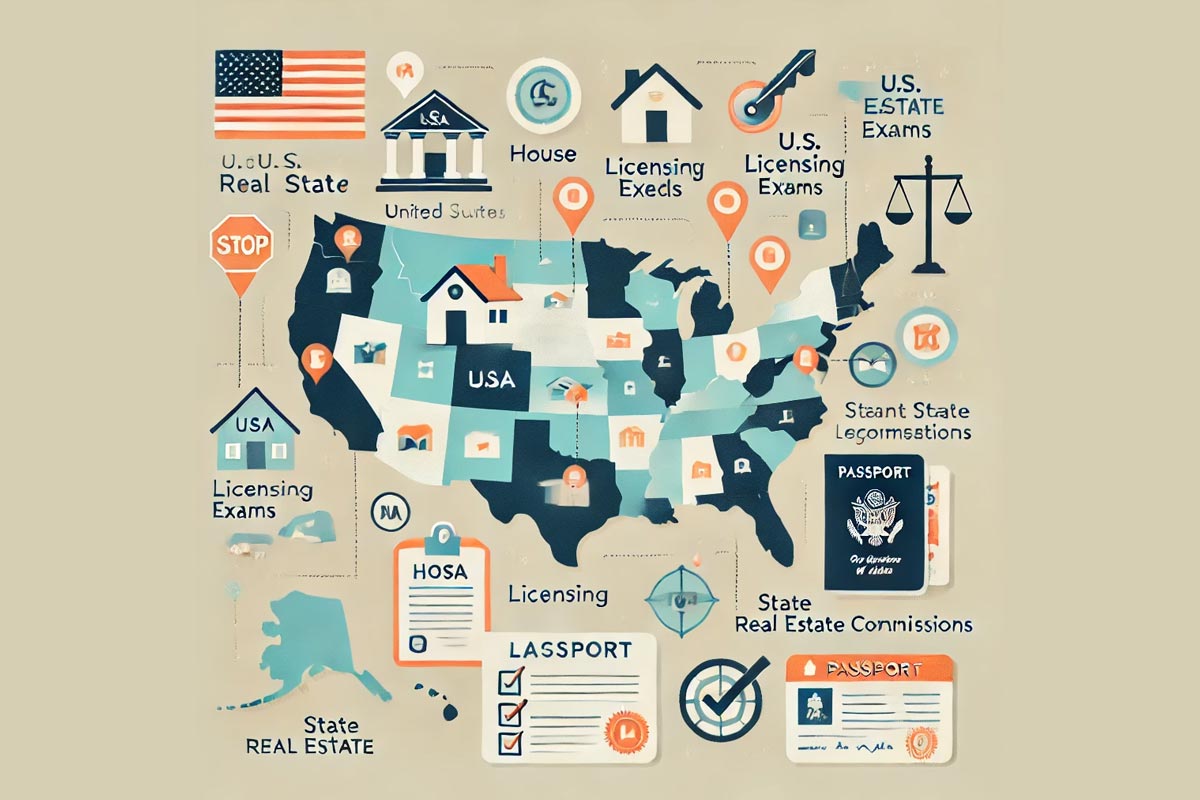
For many international real estate students, pursuing a career in the U.S. real estate market can be a stepping stone to long-term professional success. Whether you’re aiming to earn your real estate license or simply want to broaden your industry knowledge, studying in a U.S. real estate school offers a unique opportunity to learn best practices, gain exposure to complex regulations, and connect with invaluable professional networks. However, before you dive in, it’s essential to understand the requirements and potential challenges to maximize your educational experience.
Below, I break down critical considerations—ranging from visa requirements to cultural nuances—and offer concrete examples, reputable resources, and practical tips to help foreign students earn their real estate license and thrive in the U.S. market.
Visa and Residency Requirements for Licensing
Navigating Immigration Status:
Before enrolling in a real estate education program in the United States, your first step should be confirming your immigration status and visa eligibility. Most University based international students attend University on a valid student visa (F-1 or M-1), which allows for full-time study at a recognized institution. Keep in mind, however, that certain states have specific eligibility criteria for licensing. For instance, some states may require that candidates be U.S. citizens or permanent residents, while others—like Florida or Texas—allow non-residents to apply but may require additional documentation of lawful presence.
Coordinating With Authorities:
It’s wise to consult both U.S. immigration authorities and the licensing board of the state where you plan to practice. For immigration resources, visit the U.S. Citizenship and Immigration Services (USCIS) website. For state-specific licensing requirements, check each state’s real estate commission or board. For example, prospective licensees in California can find information at the California Department of Real Estate (DRE). By verifying these details early, you’ll reduce surprises and streamline your path to a license.
Language Proficiency and Course Accommodations
Meeting English Language Requirements:
Real estate coursework in the U.S. is primarily taught in English, and proficiency is critical for passing real estate exams and understanding industry jargon. Strengthening your English skills—particularly real estate terminology related to escrow, mortgage underwriting, and zoning—is essential.
Cultural Sensitivity in Real Estate Interactions
Adapting Communication Styles:
Cultural nuances extend beyond language proficiency. Understanding American business etiquette, negotiation styles, and client expectations can enhance your effectiveness as a real estate professional. For example, straightforward communication, punctuality, and direct eye contact are often valued in U.S. business settings. Familiarizing yourself with local customs—such as the appropriate use of personal space, acceptable gift-giving practices, or how to address clients formally and informally—can help build trust and credibility.
Embracing Diversity:
The U.S. real estate industry is shaped by buyers, sellers, and investors from diverse backgrounds. Being sensitive to cultural differences—whether related to decision-making processes, family involvement, or religious considerations—can help you better serve a broad range of clients. Seek out cultural awareness workshops, or talk with mentors from various communities to understand common preferences and communication norms.
Understanding U.S. Property Law and Regulations
State-by-State Differences:
Real estate is regulated primarily at the state level, resulting in a patchwork of laws and licensing requirements. For example, New York’s continuing education rules differ significantly from those in Georgia or Washington State. Understanding local landlord-tenant statutes, disclosure obligations, environmental regulations, and other property-related laws is vital. The National Association of Realtors (NAR) and state real estate associations are excellent starting points for guidance and educational resources.
Federal Guidelines and Industry Ethics:
In addition to state-level rules, you’ll need to understand federal fair housing laws and anti-discrimination measures enforced by agencies such as the U.S. Department of Housing and Urban Development (HUD). Ethical standards, largely shaped by professional associations, promote consumer protection and industry integrity. Familiarizing yourself with these regulations ensures you serve your clients fairly and ethically.
Additional Credential Evaluations and Reciprocity Issues
Evaluating Foreign Credentials:
If you have a real estate-related degree or license from abroad, consider having your credentials evaluated by a recognized organization. Services like World Education Services (WES) or Educational Credential Evaluators (ECE) can review your transcripts and equate them to U.S. standards. While this may not exempt you from state pre-licensing courses, it can streamline the admissions process for certain schools or programs.
Examples of State Reciprocity Agreements:
Some states have reciprocity agreements allowing currently licensed agents from certain jurisdictions to bypass parts of the licensing process. To find out if reciprocity applies to you, consult your target state’s real estate commission—such as the Florida Real Estate Commission (FREC) —for up-to-date information on reciprocity agreements.
Tips for Succeeding as an International Candidate
Networking and Mentorship:
Building relationships is key to success in real estate. Attend local chapter meetings of organizations like the Asian Real Estate Association of America (AREAA) or ethnic-based real estate groups that welcome diversity. Seeking a mentor—perhaps through alumni networks or real estate professionals in your community—can provide valuable insights, career guidance, and introductions to potential employers.
Hands-On Experience:
Internships, job shadowing, or part-time roles at real estate brokerages help reinforce what you learn in class. By applying classroom concepts in real-world scenarios, you’ll develop confidence, sharpen communication skills, and gain critical exposure to the daily operations of a real estate office.
Hands-On Experience:
The U.S. real estate landscape evolves rapidly due to changing market trends, emerging technologies, and new regulations. Staying current might involve obtaining additional certifications, such as Accredited Buyer’s Representative (ABR®) or Certified International Property Specialist (CIPS), both offered by NAR. These designations can distinguish you from other foreign students seeking a U.S. real estate license and demonstrate your commitment to professional growth.
For those looking to study in real estate school USA programs, the journey is both challenging and rewarding. By understanding visa requirements, honing language and cultural competency, mastering U.S. property law, and being strategic about credential evaluation and reciprocity, international real estate students can confidently navigate the licensing process. With dedication, adaptability, and cultural sensitivity, foreign students can thrive and build a successful career in the diverse and dynamic U.S. real estate industry.
Love,
Kartik
|

As a newly licensed real estate agent looking to build a robust client pipeline, you’ve likely heard the buzz about digital marketing channels—social media, paid ads, and content marketing.
Read more...
As a newly licensed real estate agent looking to build a robust client pipeline, you’ve likely heard the buzz about digital marketing channels—social media, paid ads, and content marketing.
However, email marketing is one of the most powerful, often underutilized tools at your disposal. Unlike social feeds that scroll by in seconds, emails land directly in your subscribers’ inboxes, offering a prime opportunity to nurture trust, credibility, and long-term loyalty. Through strategic, personalized emails, you can educate prospects, highlight your unique expertise, and position yourself as a go-to resource in your local market. Over time, these meaningful connections pave the way for loyal clients, repeat business and valuable referrals.
Email marketing is more than just a message—it’s your chance to build enduring relationships that translate into lasting success.
Why Email Marketing Matters for Real Estate Agents
Email marketing stands apart from other channels in several key ways. First, it’s personal. Your message arrives in a lead’s private inbox, free from the noise and distractions of social media. This direct connection lets you address subscribers by name, speak to their interests, and consistently provide valuable information.
Second, email marketing allows for pinpoint targeting. Not every lead is the same. Some may be first-time buyers who need help understanding mortgage options, while others are seasoned investors scouting their next opportunity. By segmenting your lists, you ensure your message resonates, increasing the likelihood of engagement and action.
Finally, emails support long-term relationship building—consistent messages filled with insights and educational content position you as a knowledgeable authority. Over time, this credibility makes clients more inclined to trust you when they’re ready to buy or sell—and more likely to refer your services to friends and family, instilling a sense of hope and optimism in the audience.
Building a Quality Subscriber List
A strong email strategy begins with attracting subscribers who genuinely care about what you offer. Quality outperforms quantity. Rather than stuffing your list with contacts with no genuine interest in real estate, focus on leads who find value in your expertise, reassuring the audience and boosting their confidence in their marketing strategy.
Create compelling lead magnets, which are essentially valuable resources or offers that you provide in exchange for a visitor's contact information. These could be a downloadable “10 Steps to Finding Your First Home” guide or a local market report that simplifies buying. Feature these offers prominently on your website’s landing page, social media posts, and in-person events such as open houses. Highlight the exclusive benefits subscribers will receive—early access to new listings, monthly tips on home maintenance, or insights into market trends. By emphasizing valuable content and sincere interest, you ensure the people on your list genuinely want to hear from you.
Crafting Engaging, Value-Packed Emails
The key to successful email marketing in real estate lies in delivering meaningful, easy-to-consume content. Start with a compelling subject line that sparks curiosity or promises immediate value: “5 Neighborhood Trends You Can’t Afford to Ignore” or “Your Quick Guide to Navigating Closing Costs.” Good subject lines can dramatically improve open rates.
Inside the email, keep messaging concise and organized. Use bullet points, short paragraphs, and strong visuals—such as property images, infographics, or charts showing market trends. Above all, deliver valuable insights, not just sales pitches. Share relevant statistics, offer practical tips, or highlight success stories from past clients who found their perfect home with your guidance. Add a clear call-to-action (CTA) that prompts readers to take the next step: book a consultation, explore a featured listing, or read a more in-depth article.
Segmenting and Personalizing Content
One-size-fits-all emails rarely inspire action. Instead, segment your subscribers based on their interests, homebuying stage, or other factors. For instance, first-time buyers might receive emails on understanding closing costs or securing the best mortgage rates, while sellers might see content focused on home staging and pricing strategies. Investors, on the other hand, might appreciate market forecast reports or rental yield calculators.
Personalization goes beyond using a subscriber’s name. Leverage customer relationship management (CRM) data to tailor content based on user behavior. If someone downloaded a guide on property investing, follow up with emails that explore up-and-coming neighborhoods or tax strategies. The more your emails feel like tailored advice rather than generic broadcasts, the more trust you’ll earn—and the more likely readers will be to engage and eventually convert.
Automating Nurture Sequences and Drip Campaigns
Automation can take much of the heavy lifting out of email marketing. Instead of manually sending emails individually, set up sequences triggered by specific actions. When a new lead subscribes to your list, automatically send a welcome email introducing yourself, explaining your services, and what they can expect from you. Follow up with drip emails over the next few weeks to slowly nurture the relationship.
A typical buyer drip campaign might include:
Step-by-step guidance on the homebuying process.
Timelines for due diligence.
Checklists for mortgage pre-approval.
Meanwhile, a seller sequence might focus on preparing a home for the market, understanding appraisal values, and maximizing the final sale price. When you introduce a call-to-action to schedule a showing or discuss listing options, your subscribers receive a consistent, credible value that warms them to work with you.
Establishing Authority and Trust
Your emails should reflect your expertise and position you as a trusted authority. Consider sending monthly market reports that simplify local real estate trends into easily digestible insights. Offer how-to guides for tackling common homeowner challenges or highlight local community features that make specific neighborhoods attractive.
Include stories of satisfied clients who overcame hurdles in their homebuying journey with your help. Share interviews with mortgage brokers, home inspectors, or interior designers. Host Q&A sessions via email or share recorded webinars that address common concerns. The more you present yourself as a knowledgeable, well-connected professional, the stronger your brand becomes—and the more credibility you create.
Measuring Success and Making Improvements
Data is your compass for continuous improvement. Track open rates (do your subject lines resonate?), click-through rates (are CTAs compelling?), and conversion rates (are leads taking desired actions?). Low open rates might indicate that you need more captivating subject lines, while poor click-through rates suggest that your content or calls to action need refinement.
Analyze unsubscribe rates to determine whether you’re emailing too frequently or providing irrelevant content. Implement A/B tests, a method where you compare two versions of an email or a landing page to see which one performs better, to compare different subject lines, email templates, or CTAs. Continuous monitoring and optimization ensure your email campaigns stay effective and align with your audience's evolving needs.
Advanced Strategies
Once you’ve mastered the fundamentals, consider taking your email marketing to the next level with more advanced tactics. A/B testing, for instance, allows you to compare two versions of a subject line, email copy, or CTA to see which performs better. You might test a data-driven subject line against one that highlights urgency. Over time, these experiments hone your messaging to resonate more deeply with your audience.
Another advanced technique is the use of dynamic content. With dynamic content, the email’s body can adapt based on subscriber attributes. For example, an investor might see rental property tips at the top of the email, while a first-time buyer might see mortgage checklists. This level of personalization enhances the reader’s experience and increases the likelihood of engagement.
Even if you are fresh out of real estate school, embracing email marketing as a newly licensed real estate agent can dramatically boost your visibility, credibility, and client conversion. By building a quality subscriber list, crafting compelling content, segmenting your audience, automating nurture sequences, and positioning yourself as a trusted authority, you’ll attract more leads and nurture them into satisfied clients who drive your business growth.
By embracing strategic email marketing, you’ll build a thriving, sustainable career that stands out in the competitive real estate landscape.
Love,
Kartik
|