
Key Takeaways (Read This First):
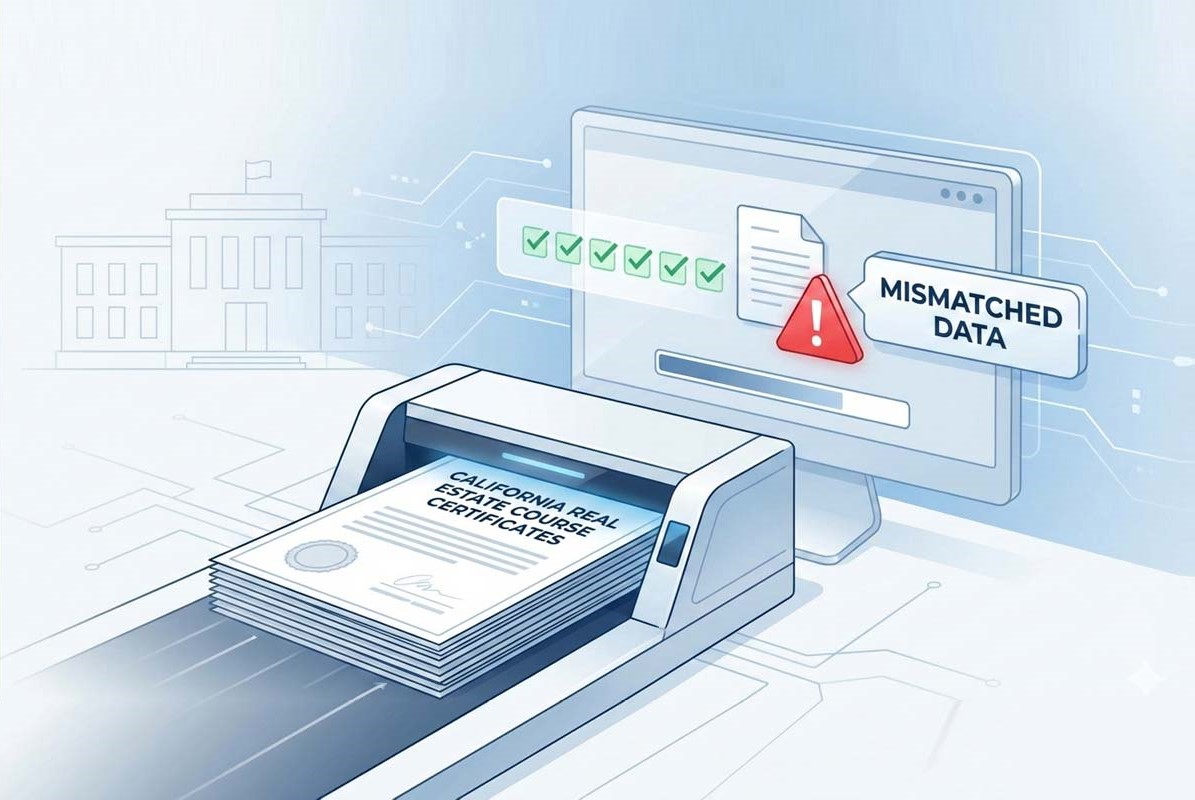
You’ve completed your real estate courses, downloaded your certificates, and submitted your application — but your real estate exam application still hasn’t been approved. For most applicants, the delay begins with one easily overlooked issue: Education Verification.
The DRE’s system is designed to move efficiently when everything aligns, but it slows down immediately when it encounters inconsistencies. Understanding how the DRE evaluates education documents is key to avoiding weeks of unnecessary waiting.
The DRE processes thousands of applications every month (crazy right?), and most of that work happens through automated checks. The system verifies whether your certificates match what their database expects: your name, your provider, your course titles, and the timing of your completions.
If anything looks unusual — mismatched names, unexpected dates, incorrect titles, inactive provider numbers — the automated flow stops. Your file leaves the fast lane and drops into manual review, which is where delays begin.
Most applicants assume that as long as the courses are completed, the DRE will read the certificates and approve them. But the DRE’s process is literal and exact. Even small formatting errors or inconsistencies can trigger a complete review.
The biggest cause of delays comes from name inconsistencies.
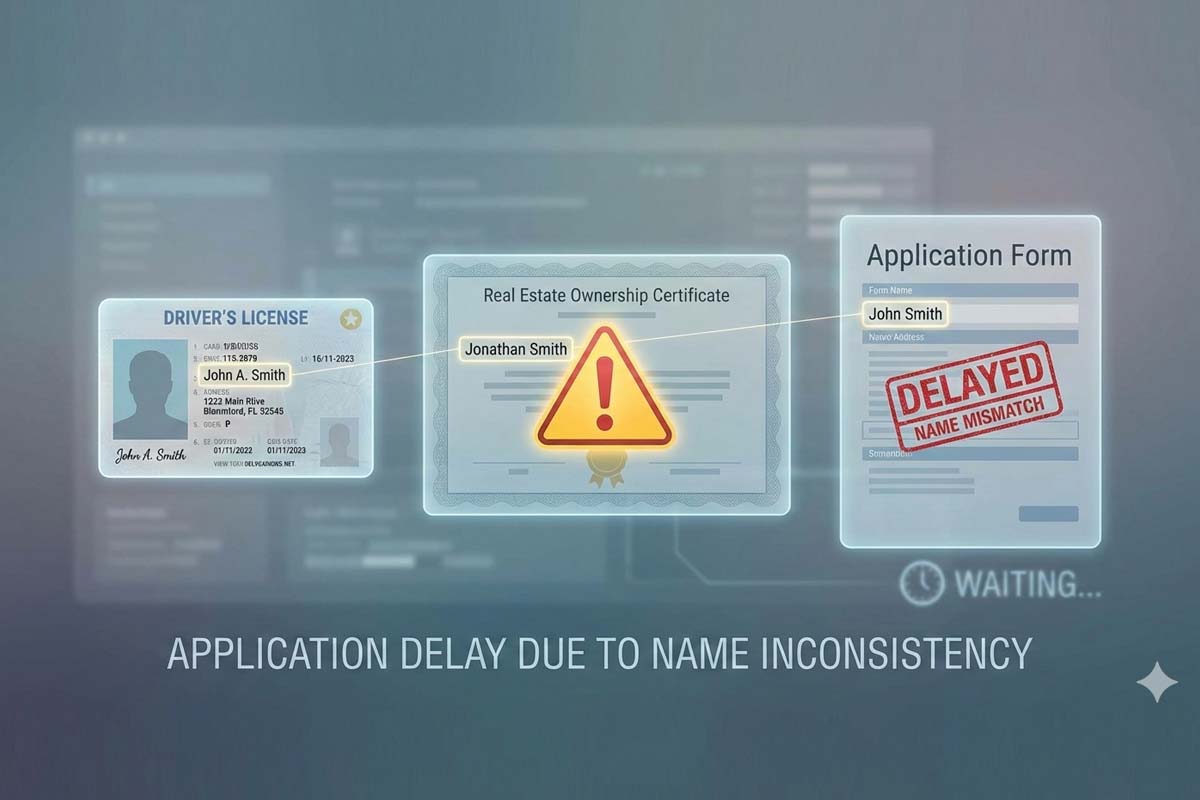
Your certificates must reflect your legal name exactly as it appears on your DRE application.
If your application says one thing, your ID says another, and your certificate uses a shortened version or a hyphen that appears nowhere else, the system assumes there’s a potential identity mismatch.
You may see a harmless variation. The DRE sees a documentation discrepancy that must be reviewed manually.
Name on DRE Application: Maria Laura Hernandez
Name on Driver’s License: Maria L. Hernandez-Wilson
Name on Course Certificates: Maria Hernandez
To the applicant, these all feel like harmless variations — a middle initial here, an abbreviated last name there, a maiden name.
But to the DRE’s automated system, these are three different names.
The system cannot confidently verify that the education belongs to the same person who submitted the application, so your file is pulled out of the automated queue and into manual review.
A small inconsistency that seems meaningless to you is treated by the DRE as a potential identity mismatch, and that’s enough to slow the entire licensing process down.
Course titles create another major slowdown.
The DRE expects titles to match their official naming conventions. Providers often rename courses for branding, but the DRE doesn’t process branding — they process compliance.
If the DRE expects “Legal Aspects of Real Estate” and your certificate says ““Intro to RealEstate Fundamentals,” the system may not recognize it, pushing your file into manual review.
This is not the DRE being picky. It’s the DRE preventing misclassification.
Provider issues are more common than people realize.
Not every website selling real estate courses is a DRE-approved school (be careful!). Some operate as resellers.
If the DRE cannot verify the provider number printed on your certificate, the application pauses immediately because the system cannot confirm your education source.
This is one of the quickest ways for an applicant to fall into a long delay without understanding why.
Completion dates also matter. California requires minimum study periods.
If your coursework appears to be completed too quickly… you fall into manual review.
The DRE checks whether your completion timeline aligns with legally required pacing. If your provider uses a faulty timestamping system, or if your certificates don’t reflect legal timing, your application will be held until an analyst can review it manually.
Even when the student did everything correctly, tech errors on the provider side can stall an otherwise clean application.
Remember, no one course can be finished faster than 18 days and no two courses can be finished faster than 36 days, etc. Also, no course can take longer than one year to complete.
Fragmented submissions are another overlooked cause of delays. Applicants sometimes send things piecemeal into the DRE.
When your education record appears split across multiple submissions, your application leaves the automated lane and waits for an analyst to reorganize the documents.
This is especially critical for broker applicants. The DRE requires all eight college-level courses submitted together. Anything less creates complications.
Checking every box eliminates nearly all common verification delays.
When you submit clean, consistent, DRE-verified certificates, your licensing process runs exactly the way it should. And the easiest way to make that happen is to start with a provider that understands the DRE’s requirements and formats everything correctly from day one. If you want to avoid delays, start your coursework with a DRE-approved school that guarantees compliant certificates — and keeps your licensing timeline on track.
California Real Estate License Renewal: 2026 CE Guide
How Long Does It Take to Finish CA Real Estate Classes?
California DRE Exam Application (eLicensing) Fast-Path Checklist

Founder, Adhi Schools
Kartik Subramaniam is the Founder and CEO of ADHI Real Estate Schools, a leader in real estate education throughout California. Holding a degree from Cal Poly University, Subramaniam brings a wealth of experience in real estate sales, property management, and investment transactions. He is the author of nine books on real estate and countless real estate articles. With a track record of successfully completing hundreds of real estate transactions, he has equipped countless professionals to thrive in the industry.

"Hey guys,
I took the exam today and passed!!!!
It only took me one try which was one of my goals. I took the online
classes and follow your suggestions so I took the crash course,
used the crash course app a lot, took 7 mock tests and went
confident to present the exam. Thank you for the great job you are
doing, you guys are awesome!!!! May God continue to bless you!"
Willie V.